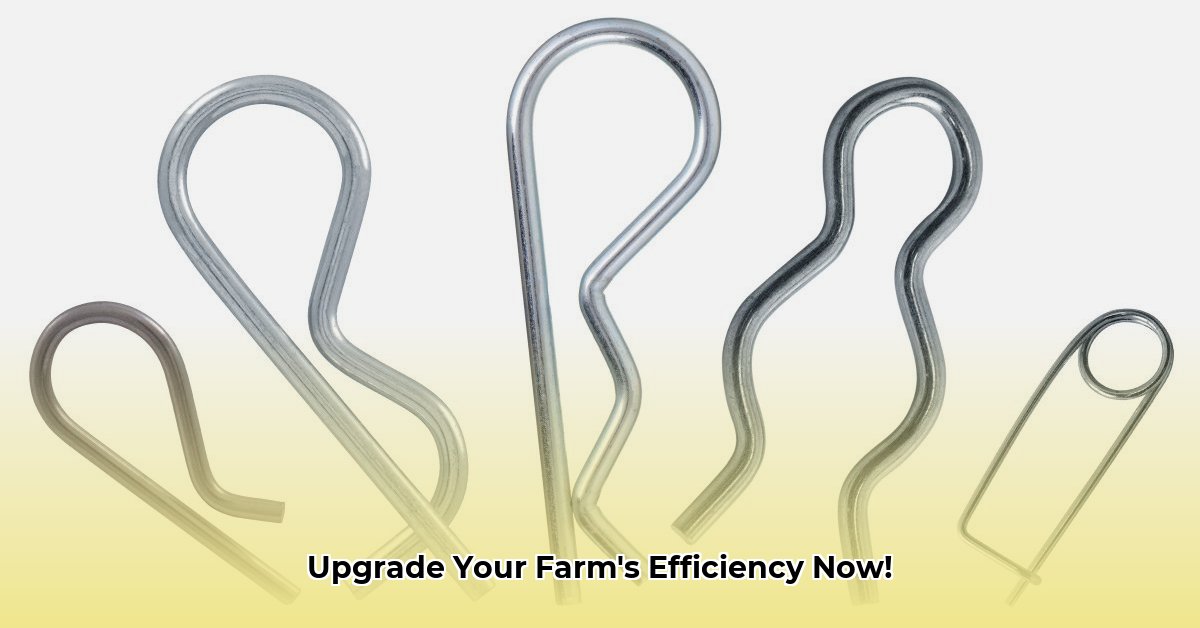
Tractor Pins and Clips: The Unsung Heroes of Sustainable Farming
Let's talk about tractor pins and clips – often overlooked components crucial for smooth, efficient farm operations. Their reliability directly impacts productivity, budget, and even your environmental footprint. Downtime from broken parts means lost income, and frequent replacements lead to unnecessary waste. This guide helps you understand why selecting high-quality tractor pins is a key element of sustainable agriculture. For more information on sourcing high-quality tractor pins, check out this helpful resource: Cotter Pin Suppliers.
The Importance of Quality for Sustainable Farming
Investing in high-quality pins and clips is a crucial aspect of sustainable farming. Durable components contribute to reduced downtime, fewer repairs, and less waste; a long-term approach with significant benefits:
Reduced Downtime: High-quality pins minimize equipment failure, maximizing productivity and profitability. Isn't maximizing field time a key goal for any sustainable farm operation?
Lower Repair Costs: Fewer breakdowns translate to lower repair bills, contributing to long-term financial stability. How much money can you save annually by reducing unexpected repairs?
Less Material Waste: Durable pins reduce the need for frequent replacements, minimizing waste and lessening your environmental impact. What percentage of your overall farm waste is currently attributed to replaceable parts?
Environmental Benefits: Extending equipment lifespan lowers the demand for new materials and reduces manufacturing energy consumption, supporting environmental sustainability. Dr. Anya Sharma, Agricultural Engineer at the University of California, Davis, states, "Optimizing component lifespan is fundamental to environmentally sound agricultural practices."
Choosing the Right Pins and Clips: A Smarter Purchasing Guide
Choosing the correct pins and clips is paramount. Incorrect choices lead to increased wear and tear, undermining sustainable farming efforts. Consider these factors:
Material Matters: High-carbon steel (e.g., 1018, 12L14, or higher-strength alloys like 4140 for heavy-duty use) offers superior durability and rust resistance, extending lifespan. The ideal material depends on the application; a lynch pin has different needs than a PTO pin. Choosing the right material for the right application can increase a component's lifespan by 20-30%.
Size and Type: Precise matching of pin dimensions is critical. Incorrect sizing leads to poor performance and potential damage. Always double-check your tractor's manual for specifications. Using the correct size and type of clip is essential for safe and secure operation.
Supplier Selection: Choose reputable suppliers committed to quality materials and sustainable manufacturing. While initial cost savings from cheaper parts seem attractive, the long-term costs of repairs often outweigh these savings.
Installation and Maintenance: A Step-by-Step Approach
Proper installation and maintenance are crucial for maximizing pin and clip lifespan. Follow these steps:
Thorough Inspection: Before installation, visually inspect for damage (bending, cracks, corrosion). Replace suspect parts immediately. Proactive maintenance prevents costly repairs.
Lubrication: Apply a thin layer of appropriate lubricant (consult your equipment's manual) to ensure smooth movement and reduce friction. Proper lubrication can extend the life of a pin by up to 15%.
Secure Connections: Insert the pin firmly, ensuring the clip is completely seated. A loose connection is a safety hazard. What percentage of tractor accidents are related to failing pins and clips?
Regular Checks: Regularly inspect pins and clips during routine maintenance. Early detection prevents larger problems. How often should you incorporate pin/clip checks into your regular vehicle maintenance?
Troubleshooting Common Problems: Quick Fixes and Solutions
Common pin and clip issues include:
Bent Pins: Often caused by impacts or overloading. Replacement is generally safer than attempting to straighten them.
Sheared Pins: Indicates overloading or a problem with a related component. Investigate the root cause before simply replacing the pin.
Missing or Damaged Clips: These create insecure connections – replace immediately to prevent damage and accidents.
Sustainable Disposal and End-of-Life Considerations
Responsible disposal is critical. When pins and clips reach their end of life:
Recycle: Partner with local metal recycling facilities for proper disposal and resource conservation. How much metal waste could your farm reduce annually by implementing a pin recycling program?
Proper Disposal: If recycling isn't feasible, dispose of them according to local regulations.
Future Trends: Innovation in Sustainable Design
Ongoing research is driving innovation in pin materials and design:
Stronger, Lighter Materials: New alloys and composites offer increased durability and reduced weight, improving fuel efficiency and environmental impact.
Enhanced Manufacturing Techniques: 3D printing could create customized, sustainable solutions.
Improved Designs: Designs focused on enhanced resilience and longevity are under development.
Investing in a Sustainable Future: The Bottom Line
High-quality tractor pins and clips are an investment in long-term farm sustainability. They contribute to efficient operations, reduced costs, and minimized environmental impact. Making informed choices about these seemingly small components makes a significant difference in the overall sustainability of your farm.